
 Iran, Tehran, Pasdaran, Fourth Neystan St, Building No. 7, Unit One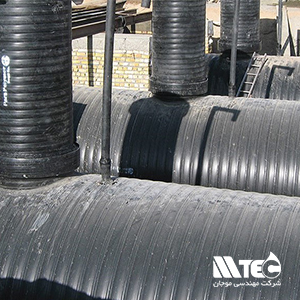
Articles
A septic tank is a vertical or horizontal burial tank that is the key part of a sewer system. This method is the simplest and most widely used unit used in wastewater treatment, especially sanitary and human wastewater. Each septic tank is made of different components, the most important of which include the sewage inlet system, the primary septic tank, the separation wall, the clarification tank, the biogas outlet (ventilation), and the sewage outlet system.
These purification units are the simplest type of single-unit units in which mechanical purification and bio-purification are performed simultaneously with the help of anaerobic bacteria. Septic tanks are mostly used in places where there is no sewage piping. Their reservoir is divided into 2 to 3 compartments and the residence time of sewage and effluent in them is between 1 to 3 days.
Each septic tank consists of two main parts: the septic tank and the drainage space. The septic tank is a space for dewatering, and depending on the type, it is made of concrete, fiberglass and polyethylene. These reservoirs typically have an inlet and outlet reservoir from which effluent enters. Sewage storage at this stage separates solids and liquids from each other.
Sewage at this stage is formed in three layers. At the upper level, solids lighter than water, such as oil and grease, and solids heavier than water are placed at the bottom, forming a layer of sludge in that part (the layer in the middle at this stage is somewhat transparent). Is). Sludge and calcined layers remain in the reservoir, which (anaerobic) bacteria in this part are responsible for digestion. Materials and sludge that are not digested are stored in the tank and discharged from the tank using a sewage pump.
In the tank drain space, a transparent liquid stream enters the built-in space and is ready to leave and drain from the tank. The outlet pipes installed on the septic tank are responsible for draining this clear liquid.
A septic tank is a reactor for separating and purifying materials that has two separate chambers. Fats and heavy materials are collected and separated in the upper chamber and then transferred to the second chamber using aerobic bacteria (in aerobic septic tanks) and anaerobic bacteria (in anaerobic septic tanks). Decomposes existing materials and causes wastewater treatment. Since many chemical reactions take place with acidic and base substances, the best option in making septic tanks is polyethylene septic tanks; Because they are very resistant to these reactions.
Here are some important features of septic tanks that have led to their widespread use in various domestic, industrial and sanitary sectors. The first is pre-treatment and pre-treatment of sanitary wastewater. The second case is the removal of fat particles and oils in the sewage of restaurants to prevent rapid filling of wells and clogging of pipes. The third and final case is the balancing of the sewage pumping.
In order to increase the efficiency of septic tanks, it is necessary to observe a few points. The sludge accumulated in the septic tank should be discharged after about two years. But it is better to keep some of it because these materials contain microorganisms and bacteria that are effective in purification and its complete evacuation will require restart time. Also, in order to increase the function of septic tanks, avoid pouring antibacterial detergents and rainwater, which is rich in oxygen, as it kills anaerobic bacteria.
No need for mechanical parts and specialized staff, very high wall strength, minimum life of 50 years, and can be installed at any depth according to customer needs, are some of the advantages of using septic tanks. Some consider septic tanks to be the most economical means of wastewater treatment, while others prefer to use an anaerobic reactor or aerobic wastewater treatment package due to their low efficiency.
Sewage degreaser
One of the important processes of water and industrial wastewater treatment is flotation with soluble air, which leads to the clarity of wastewater and wastewater due to the removal of various pollutants such as oil, grease, grease and colloidal particles. In the degreasing system, using methods such as DAF, API, CPI, fats and oils with a suitable retention time and due to their lightness will float on the surface of the wastewater and are easily collected and treated.
If the volume of wastewater is small, but the concentration and diameter of the oil grains are high, the American Petroleum Institute (API) and Corrugated Plate Interceptor (CPI) gravity degreasing packages are mostly used in the treatment. In the simple degreasing or gravity method, the wastewater is stored in special ponds for a relatively long time so that particles whose specific gravity is less than the specific gravity of the fluid are transferred to the surface of the pond and collected by a scavenger. This method is mostly used for flotation of coarse and suspended grain oils.
However, if the volume of wastewater and oil concentration is high and the diameter of oil grains is small, the Dissolved Air floatation (DAF) method is mostly used. The operation of removing contaminants and colloidal particles by injecting compressed air into the degreasing effluent of DAF sewage is called. In the DAF degreasing package system, separation takes place by inserting tiny air bubbles into the liquid phase. Compressed air enters the wastewater storage tank and causes bubbles to form in the fluid. The resulting bubbles adhere to the colloidal and suspended particles and transfer the particles to the surface of the liquid. These particles are then collected from the surface of the liquid by skimmers.
A variety of coagulants can be used to increase the efficiency of the DAF degreasing package. These materials coagulate
 Ministry of Power
 Oil Ministry
 Agriculture
 Water and Sewerage Company